


Join Mikel and Friends TONIGHT's for the "Don'ts!" with Warriors for Life (WFL)

Drop in TONIGHT with Volunteer and Army Veteran Mikel Burroughs for "Burly's Warriors" edition of Warriors for Life (WFL) Online, presented by Victory for Veterans, Inc. (VFV).
We are asking everyone to share who we are and what support that Victory for Veterans, Inc. (VFV) is providing via WFL. If you know someone who is a veteran, first responder or a family member/caregiver, please ask them to join us for at least one meeting so they can learn more about what we do and how they can share their wisdom with others who may be able to learn from them.

TONIGHT's Topic: "Don'ts!"

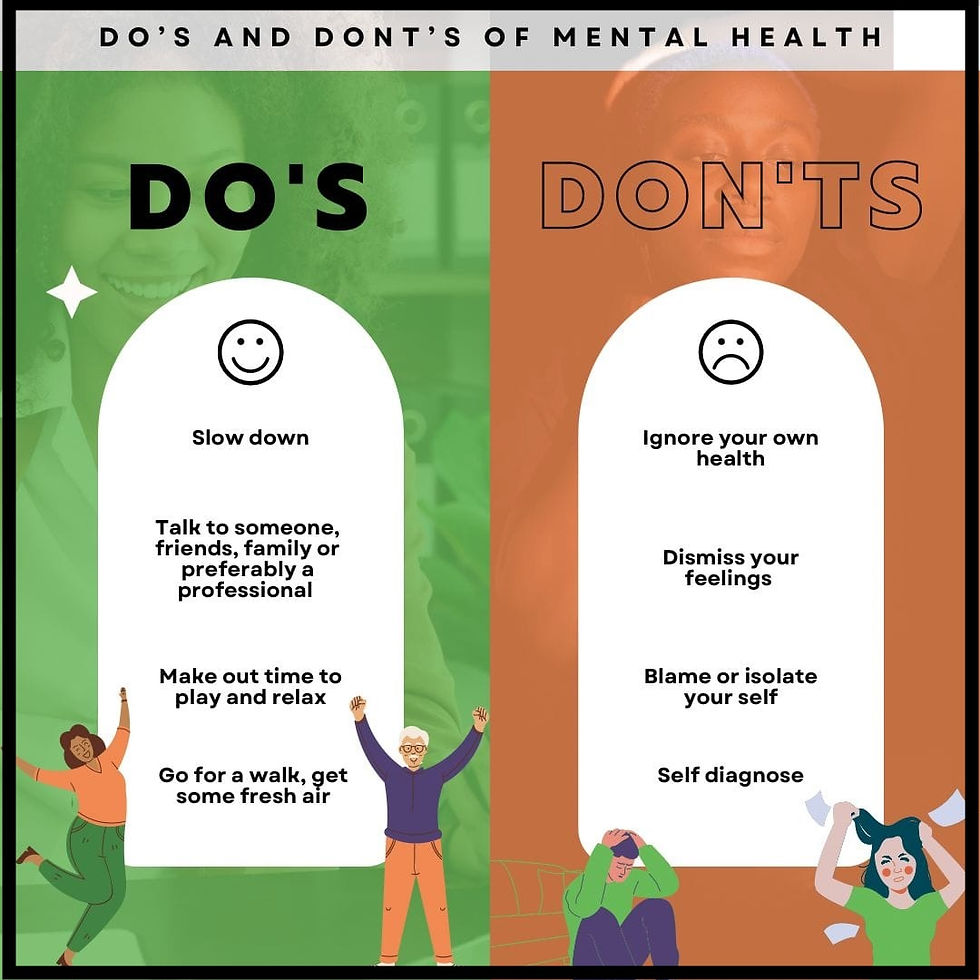
Join Mikel & Friends TONIGHT as we discuss the "Don'ts!" when it comes to invisible wounds (PTSD, MST, TBI, etc.) and Mental Health. We hope you'll join us!
When supporting individuals with invisible wounds—such as Traumatic Brain Injury (TBI), Post-Traumatic Stress Disorder (PTSD), and Military Sexual Trauma (MST)—well-meaning actions can sometimes be counterproductive or even harmful.
Below are critical "don'ts" to keep in mind:
Communication Pitfalls
Don't say "Just get over it" or "Move on." Healing is a long, non-linear process; these phrases oversimplify the experience and can cause feelings of shame or inadequacy.
Don't say "It could have been worse." Minimizing or comparing their trauma to others' experiences invalidates their personal pain and reality.
Don't say "I know how you feel" (unless you truly do). Every experience is unique, and presumptive statements can feel self-centered and dismissive.
Don't ask "What did you do over there?" For veterans, questioning them about combat or the number of people they killed can trigger traumatic memories and intrusive thoughts.
Don't use "PTSD" or "Triggered" casually. Using these terms to describe minor daily frustrations (like a rude cashier) minimizes the severity of a clinical medical condition.
Behavioral Boundaries
Don't touch without permission. Many survivors have a heightened need for personal space or an exaggerated startle response; sudden or uninvited physical contact can make them feel threatened.
Don't surprise or startle them. Avoid loud noises, sudden movements, or "sneak attacks," as these can trigger hypervigilance or flashbacks.
Don't pressure them to talk. Forcing someone to share details of their trauma before they are ready can be re-traumatizing.
Don't offer unsolicited advice. Suggesting "you should try this" or "have you considered that" is often unhelpful and can feel invalidating to someone already seeking care.
Interacting with TBI and Cognitive Challenges
Don't "over-assist" or be patronizing. While it is helpful to offer aid with complex tasks, do not insist on doing everything for them, as it can undermine their independence.
Don't show impatience or anger. If an individual with TBI has trouble remembering or organizing thoughts, becoming frustrated or responding with verbal aggression can escalate their distress.
Don't assume they are "healed" because they look fine. TBI is often called the "hidden disability" because cognitive and emotional effects persist long after physical wounds have closed.
Don't set goals without their input. In recovery and rehabilitation, imposing unrealistic expectations or goals without the survivor's involvement can damage motivation and rapport.
Military-Specific Etiquette
Don't show pity. Wounded veterans generally prefer to be treated with dignity and respect rather than being pitied.
Don't assume every veteran has PTSD. Assuming a mental health condition just because someone served in the military is a misconception to avoid.
Don't ignore their caregivers. Family members and caregivers are vital parts of the recovery team and should be included in relevant conversations rather than overlooked.
For further specialized guidance, you can explore resources from the Department of Veterans Affairs (VA) or BrainLine regarding best practices for supporting survivors.

Overcoming the "don'ts" in mental health—such as isolation, self-blame, or ignoring symptoms—requires replacing negative habits with intentional, compassionate actions (the "dos"). Key strategies include fostering social connection, practicing self-care, and seeking professional support, all of which help manage conditions rather than allowing them to take control.

Here is how to overcome specific mental health "don'ts":
1. Overcoming Isolation ("Don't Isolate")
Stay Connected: Actively maintain contact with friends and family via phone or video chat to avoid feelings of loneliness.
Create Routine: Structure your day with consistent sleep, meal, and activity times, which prevents withdrawal.
Volunteer: Engage in helping others to get out of your own head and minimize anxiety.
2. Overcoming Self-Blame ("Don't Judge Yourself")
Practice Self-Compassion: Accept that mental health struggles are not signs of weakness or personal failure.
Challenge Negative Thoughts: Identify and actively challenge unhelpful, critical, or catastrophic thoughts.
Practice Mindfulness: Focus on the present moment and observe feelings without passing judgment on them.
3. Overcoming Passive Coping ("Don't Ignore Symptoms")
Seek Professional Help: Do not hesitate to contact therapists or doctors if you are struggling.
Use Tools: Implement tools like a "Wellness Action Plan" to identify when your health is declining and act early.
Educate Yourself: Learn about your condition to increase your sense of control.
4. Overcoming Environmental Stress ("Don't Doomscroll")
Limit Media Exposure: Reduce time spent on news or social media that negatively affects your mood.
Organize Your Space: Declutter your home or workspace to reduce mental clutter and stress.
Engage in Hobbies: Actively engage in creative or relaxing activities to reduce tension.
5. Overcoming Negative Habits ("Don't Resort to Unhealthy Behaviors")
Prioritize Physical Health: Exercise (even walking 30 minutes a day), eat balanced meals, and ensure adequate sleep.
Reduce Alcohol/Caffeine: Minimize intake of substances that can worsen anxiety and cause mood shifts.
6. Overcoming Stigma ("Don't Suffer in Silence")
Talk Openly: Discuss mental health to break down stigma and normalize the conversation.
Build a Support System: Surround yourself with people who encourage you and are willing to listen without judgment
Our Vision at Victory for Veterans, Inc. (VFV) is simple: "Where Hope, Support, and Healing come together!"
We encourage you to join us, Everyone is Welcome, Everyone Matters, You Matter to Us, so Talk to Us! — invite a friend!
Veterans Crisis Line (24/7): Dial 988 then press 1, or text 838255, or use online chat.

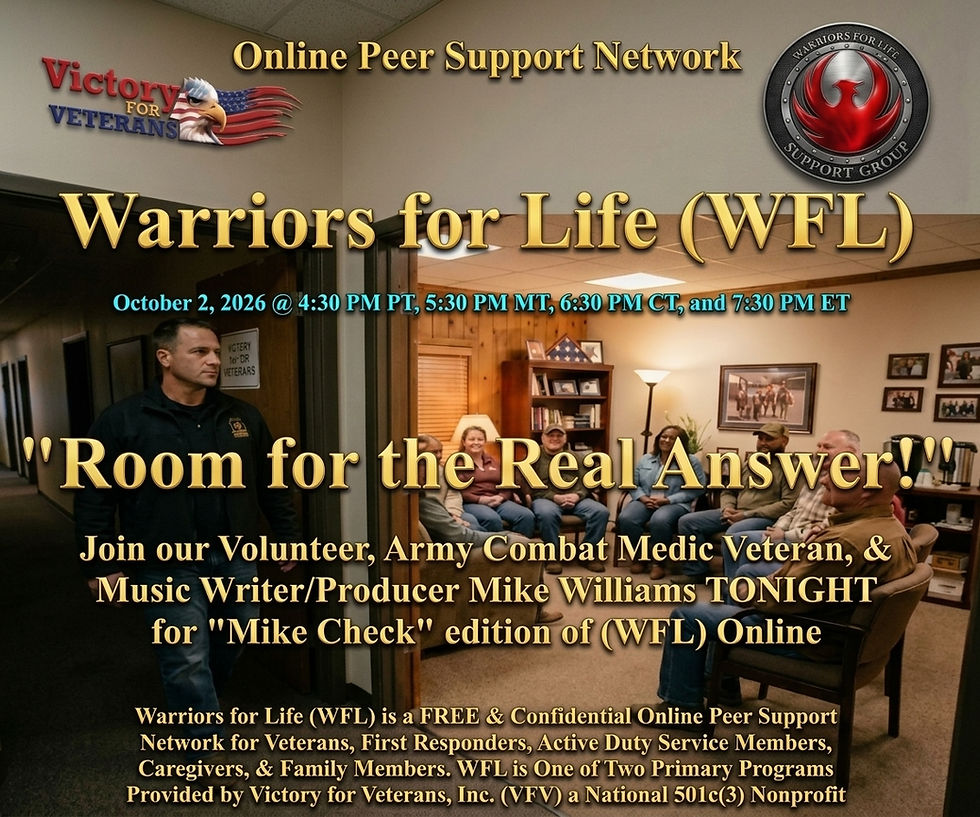
Warriors for Life (WFL) Peer Support Network Online "Burly's Warriors" edition, presented by Victory for Veterans, Inc. (VFV) — (TONIGHT), March 7, 2026 @ 4:30 PM PT, 5:30 PM MT, 6:30 PM CT, & 7:30 PM ET
Join Zoom Meeting: https://us06web.zoom.us/j/87197441247
Remember: Warriors for Life (WFL) Online, presented by Victory for Veterans, Inc. (VFV) meets on Saturdays, Sundays, Mondays, Tuesdays, Wednesdays, Thursdays and Fridays — (7-days) a week. Every week stay connected on Friday Mornings with "Coffee with Kim" and Monday Mornings for "Cup O' Joe" with Derrick at 8:00 AM CT.
“Everyone Matters, Talk to Us!"— Army Veteran Mikel Burroughs
Thank you,
Army Veteran Mikel Burroughs, Founder & Volunteer Facilitator, Warriors for Life (WFL), & CEO, Victory for Veterans, Inc. (VFV)


Comments