


Join Steven & Friend for "Accessing Community Resources!" with Warriors for Life (WFL)

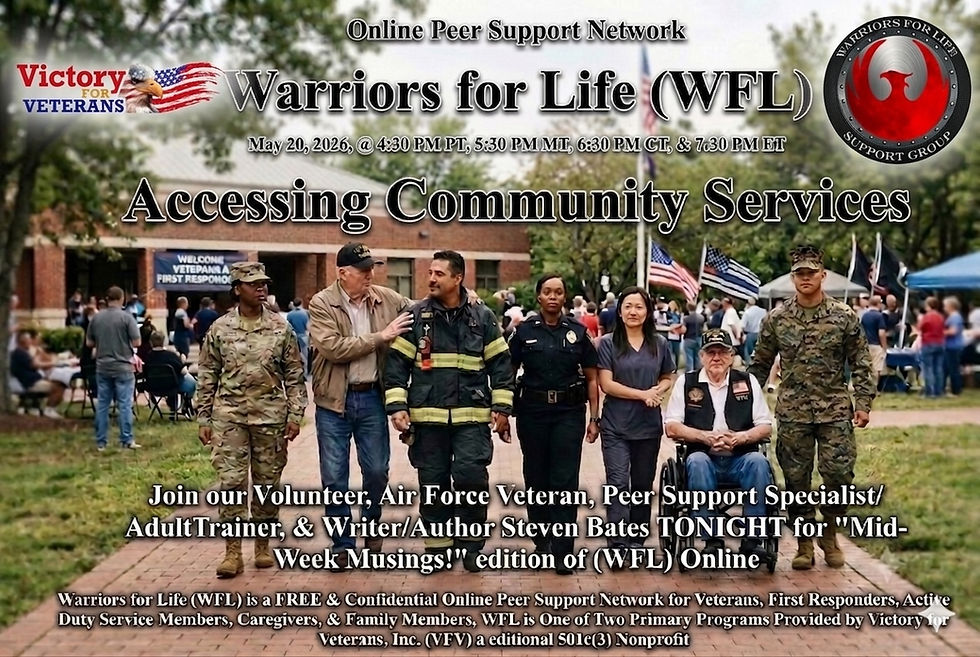
Join our Volunteer, Air Force Veteran, Peer Support Specialist/AdultTrainer, and Writer/Author Steven Bates TONIGHT for "Mid-Week Musings!" edition of Warriors for Life (WFL) Online, sponsored and presented by Victory for Veterans, Inc. (VFV).
We are asking everyone to share who we are and the support that Victory for Veterans, Inc. (VFV) is providing through Warriors for Life (WFL). If you know someone who is a veteran, first responder or a family member/caregiver, please ask them to join us for at least one meeting so they can learn more about what we do and how they can share their wisdom with others who may be able to learn from them.
"Accessing Community Resources!"
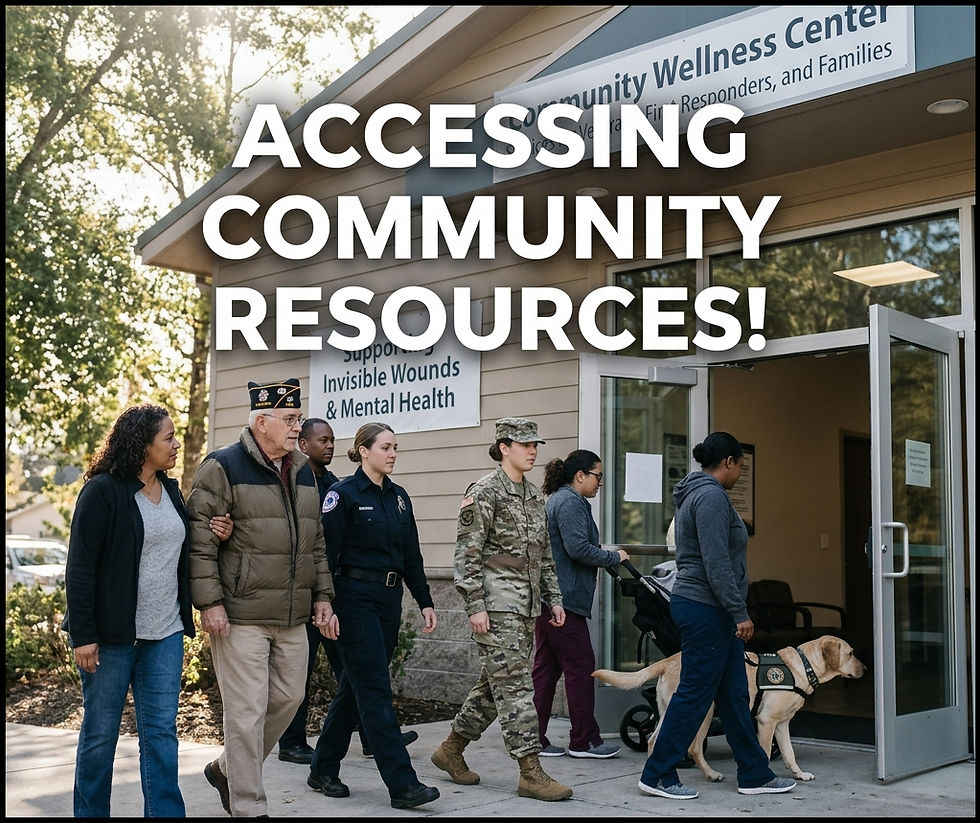
"Ahh, the community, a place often shunned and avoided even by the best of those struggling with depression and PTSD. But what if I told you the community has so much to offer to those who are struggling with those very situations? That is indeed the case. Resources are abundant in our community if you only know how and where to look for them. From therapy solutions to peer support groups, from veterans' groups to religious communities, from civilians to fellow vets, from first responders to residential treatment facilities, resources are abundant within the community. It's just a question of looking, finding, and participating in those resources."
Welcome, everyone. Today, we are talking about a critical step in our healing journeys: Accessing Community Services. Whether you are active duty, a veteran, or a first responder, carrying invisible wounds like trauma, moral injury, severe stress, or moral fatigue can make you feel completely isolated. But you are not alone, and you do not have to carry this weight by yourself.
Society often tells us to be tough and self-reliant, which makes asking for help feel like a weakness. It isn't. Seeking support is a tactical decision to strengthen your resilience. Right in our local area, there are people, programs, and resources dedicated entirely to standing in the gap for us. Today, we will explore what these resources are, how they help, and exactly how to find and use them. It really is just a matter of looking, finding, and participating. Let’s dive in.
How Community Resources Help
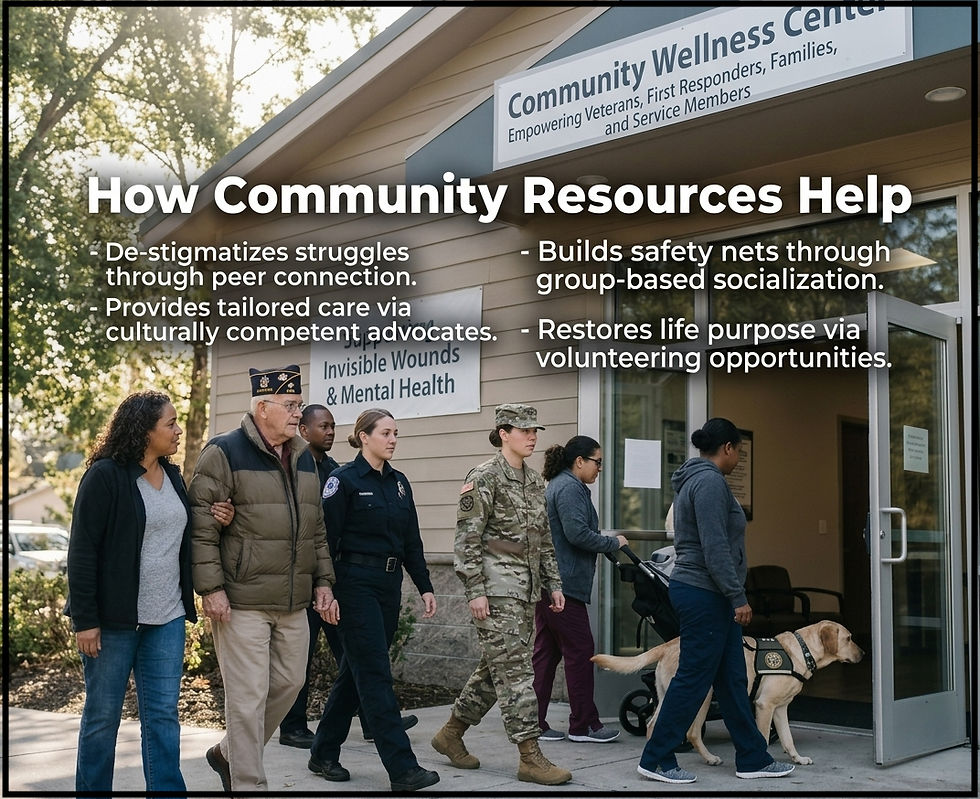
Invisible wounds require a holistic approach to healing that goes beyond clinical therapy. Local resources bridge the gap between clinical treatment and everyday civilian life.
De-stigmatize Struggles: Connecting with peers normalizes your mental health experiences.
Provide Tailored Care: Local advocates understand the specific culture of service.
Build Social Safety Nets: Group activities combat the isolation that feeds depression.
Restore Purpose: Volunteering and local mentorship options help regain a sense of mission.
Common Resources Available in Most Cities
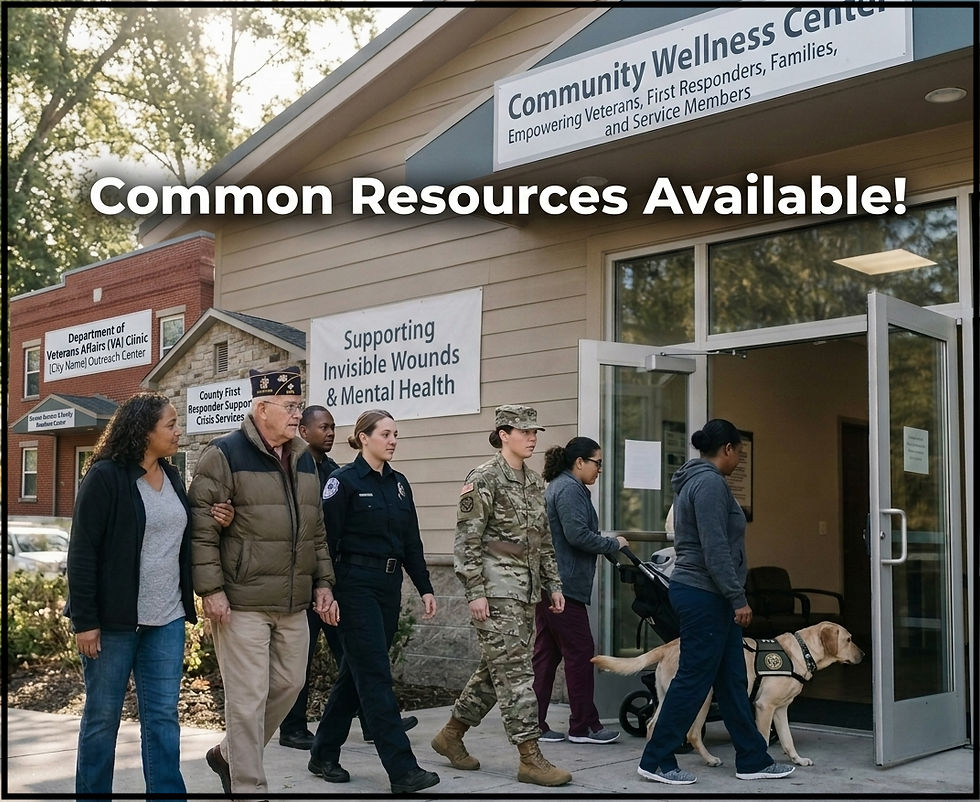
You do not always need a massive military base nearby to find help. Most towns and cities have established networks ready to assist.
VFW and American Legion Posts: Local chapters offer camaraderie, community service projects, and VA claims assistance.
The Steven A. Cohen Military Family Clinics: Provide low-to-no-cost behavioral healthcare for veterans and families.
First Responder Support Networks: Local peer-support teams and specialized chaplains built for police, fire, and EMS.
County Veteran Service Officers (CVSO): Local government employees who help navigate local, state, and federal benefits for free.
Team Red, White & Blue (Team RWB) / The Mission Continues: Community chapters focusing on physical fitness, social events, and local volunteer projects.
Warriors for Life (WFL) Online Peer Support Network: Focuses on peer support nationally from the confort of your home (10) times a week, 365 days out of the year, and covers every state in USA, as well overseas.
How to Connect with Community Services
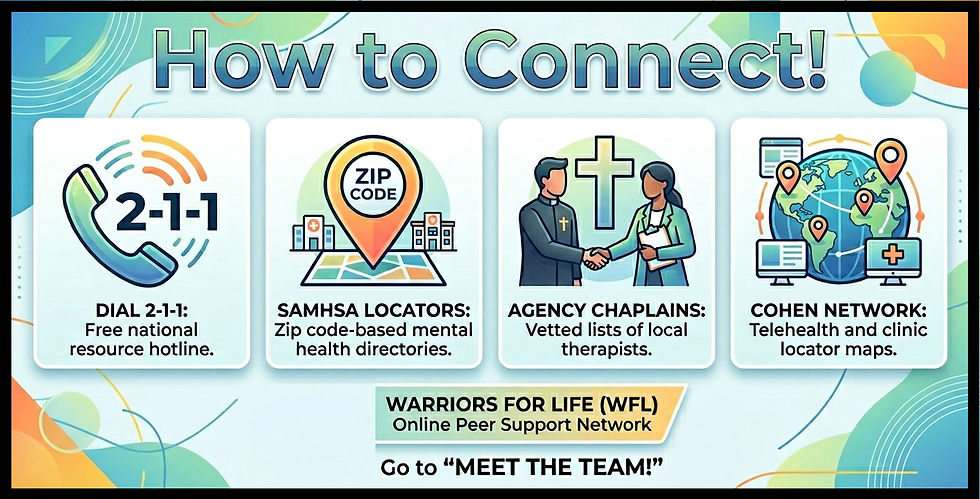
Finding these resources requires knowing where to look, but navigating the system is simpler than it seems.
Dial 2-1-1: A free, confidential national service that connects people to local community resources.
Use the NVTI or SAMHSA Locators: Online behavioral health directories searchable by zip code.
Visit Local Fire/Police Chaplains: They maintain lists of culturally competent local therapists.
Check the Cohen Veteran Network: Online maps pinpoint clinic locations and telehealth options.
As we wrap up today's discussion, remember that looking for resources is only the first step. Finding them gives you a target. But participating is where the actual healing happens. These programs only work if you show up and allow them to work for you. It takes immense courage to walk through a new door or pick up the phone, but everyone in those spaces has either been in your shoes or is trained to hold the door open for you. Don't let pride or fear keep you from the local support network you have rightfully earned.
Call to Action!
Before we leave this room today, I challenge every single person here to take one concrete action in the next 48 hours.
Either look up one local resource we talked about today, save the 2-1-1 number in your phone, or reach out to a fellow brother or sister who is struggling and share one resource with them.
Knowledge without action changes nothing. Let's take accountability for our healing. Do the research, find your resource, and participate. See you all next week—stay safe.
Warriors for Life (WFL) Online "Mid-Week Musings!" edition presented by Victory for Veterans, Inc. (VFV) — Wednesday (TONIGHT), May 20, 2026, @ 4:30 PM PT, 5:30 PM MT, 6:30 PM CT, & 7:30 PM ET
Join Zoom Meeting: https://us06web.zoom.us/j/87440882846
Thank you,
Steven Bates, Air Force Veteran, Writer/Author, Peer Support Specialist/Adult Trainer, & Volunteer Facilitator, Victory for Veterans, Inc.


Comments