


Join Derrick and Friends TONIGHT for "Just Say NO!" with Warriors for Life (WFL)

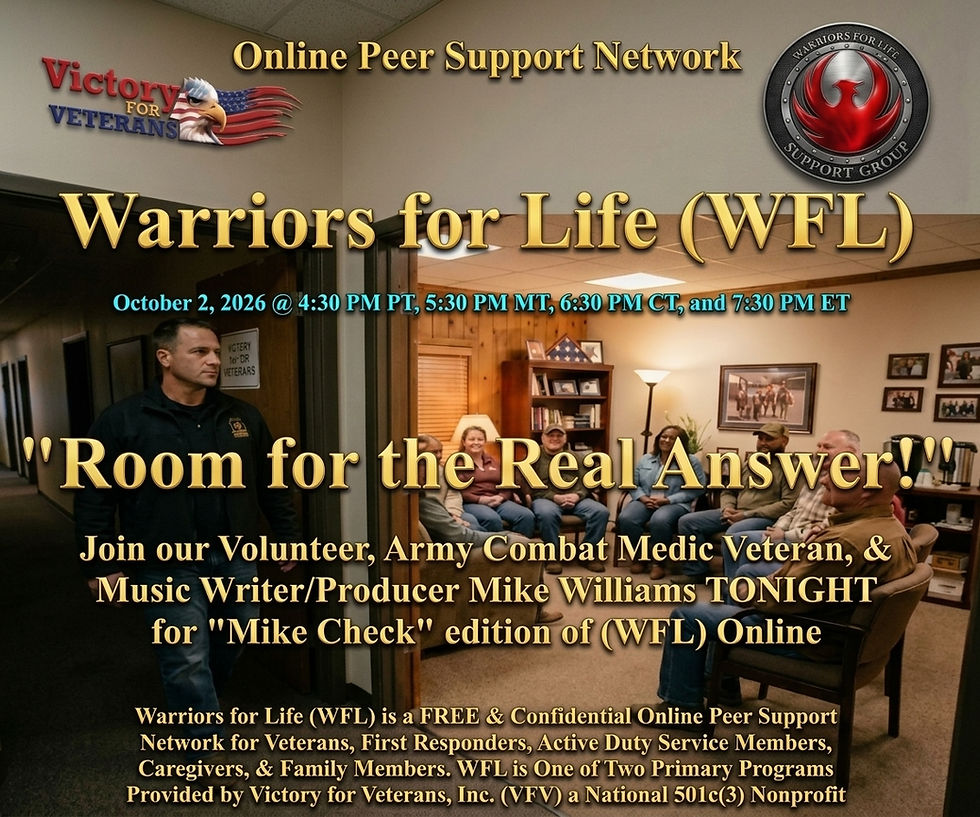
Join our Volunteer, Army Veteran & Peer Support Specialist/Supervisor Derrick Iozzio TONIGHT for "Forever Forward!" edition of Warriors for Life (WFL) Online, sponsored and presented by Victory for Veterans, Inc. (VFV).
We are asking everyone to share who we are and what support that Victory for Veterans, Inc. (VFV) is providing via WFL. If you know someone who is a veteran, first responder or a family member/caregiver, please ask them to join us for at least one meeting so they can learn more about what we do and how they can share their wisdom with others who may be able to learn from them.

TONIGHT's Topic: "Just Say NO!"

Join Derrick and friends TONIGHT for "Just Say NO!" A discussion about boundaries and mental health.
"Just saying no" is vital for mental health because it establishes necessary boundaries that protect your time, energy, and emotional well-being, reducing stress and preventing burnout. It serves as an act of self-care and self-respect, allowing you to prioritize your own needs, avoid resentment, and cultivate healthier relationships.
Key reasons to "Just Say No" for mental health:
Prevents Burnout & Overload: Declining extra demands helps manage stress, prevents emotional exhaustion, and stops you from taking on more than you can handle.
Protects Energy & Time: Setting boundaries allows you to guard your limited, precious resources for things that truly matter to you.
Reduces Resentment: Saying "no" helps avoid the bitterness and anger that often follow taking on, or "people-pleasing," out of obligation.
Empowers Self-Care: It is an act of self-respect, communicating that your needs, health, and peace are valuable.
Improves Relationships: Clear boundaries help others understand what is acceptable, fostering healthier, more respectful connections.
Learning to say "no" is not selfish; it is a critical skill for maintaining mental, emotional, and physical wellness.

Boundaries are essential limits on time, energy, and emotions that protect mental health by reducing stress, preventing burnout, and fostering self-esteem. They act as a protective framework, allowing individuals to communicate needs, manage emotional overload, and maintain healthy, respectful relationships.
Advantages of Healthy Boundaries

Key ways boundaries support mental health include:
Reduced Stress and Anxiety: By setting clear limits on others' demands, boundaries lower overcommitment and emotional exhaustion.
Preventing Burnout: They help manage energy levels, ensuring personal, work, and social life does not exceed capacity.
Improved Self-Esteem: Establishing boundaries affirms that your needs, values, and time matter, boosting self-respect.
Stronger Relationships: Clear boundaries define expectations, reducing resentment and promoting mutual respect.
Mental Clarity and Autonomy: They foster a sense of personal safety, independence, and control over one’s own life.
Without boundaries, individuals risk becoming emotionally exhausted, overwhelmed by others' demands, and losing sight of their own needs.
Signs of Poor Boundaries

Setting healthy boundaries for mental health involves identifying your personal limits, communicating them clearly and directly using "I"" statements, and consistently enforcing them to protect your time, energy, and emotional well-being. Key strategies include learning to say "no" without guilt, practicing self-awareness, and allowing your boundaries to evolve as your needs change.
Here is a guide to setting healthy boundaries:
Reflect and Identify Limits: Assess which areas of your life cause stress, discomfort, or resentment, as these often indicate a need for a boundary. Identify your physical, emotional, and mental limits (e.g., how much time you can spend with someone or how much work you can take on).
Communicate Clearly and Assertively: Use direct language to express your needs without blaming others.
Example: "I need to turn off my work email after 6 PM to recharge".
Example: "I cannot take on any new projects right now".
Enforce Consistently: Be consistent to ensure boundaries are respected. If someone violates a limit, address it immediately and remind them of the boundary.
Start Small: If you are uncomfortable setting boundaries, begin with small, manageable limits, such as not answering phone calls during dinner or limiting social media use.
Understand It's Self-Care: Recognize that setting boundaries is not selfish, but necessary for protecting your mental health and fostering healthier relationships.
Prepare for Pushback: Understand that people might react negatively, especially if they are used to you accommodating them. Stay firm in your decision and remember your "why".
10 Steps to Setting Healthy Boundaries

Common Areas for Boundaries:
Time: Protecting your personal time by not working weekends or limiting time with draining individuals.
Emotional: Limiting how much emotional energy you expend on other people's problems.
Physical/Material: Setting limits on personal space or lending possessions.
Digital: Turning off notifications or not answering non-urgent messages immediately
Warriors for Life (WFL) Online "Forever Forward!" edition presented by Victory for Veterans, Inc. (VFV) — Thursday (TONIGHT), February 26, 2026, @ 4:30 PM PT, 5:30 PM MT, 6:30 PM CT, & 7:30 PM ET
Join Zoom Meeting: https://us06web.zoom.us/j/81682532691
Thank you,
Derrick Iozzio, Army Veteran, Peer Support Specialist/Supervisor, Catch 22 Peer Support Founder, & Volunteer Facilitator, Victory for Veterans, Inc. (VFV)


Comments