


Join Kirk and Friends for Discussion About "Fear!" TONIGHT with Warriors for Life (WFL)

Come join Volunteer, Peer Support Specialist Kirk Poe for "Awaken Your Inner Healer!" edition of Warriors for Life (WFL) Online, sponsored and presented by Victory for Veterans, Inc. (VFV).
We are asking everyone to share who we are and the support that Victory for Veterans, Inc. (VFV) provides through Warriors for Life (WFL). If you know someone who is a veteran, first responder or a family member/caregiver, please ask them to join us for at least one meeting so they can learn more about what we do and how they can share their wisdom with others who may be able to learn from them.
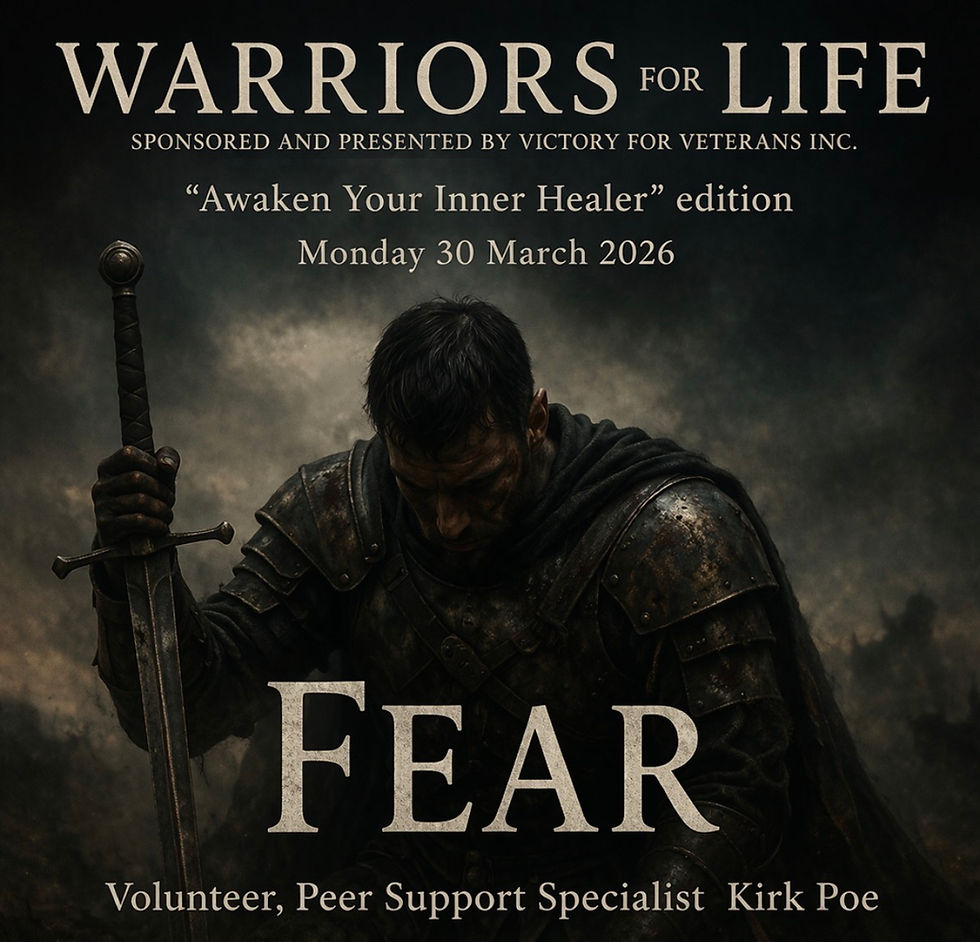
TONIGHT's Topic: "Fear!"

Join Kirk and Friends, TONIGHT and let's get together online for the Warriors for Life (WFL) as we discuss "Fear!" and mental health. How does "Fear" affect your mental health and how do we overcome it.
Standing Tall—Getting Ahead of Fear and Taming the Invisible Wounds
Getting Ahead of Fear: Taming the Fire Within
Let's Discuss "Fear" and Its Impact on Those with PTSD, MST, TBI, and Other Invisible Wounds
TONIGHT, we’re going to talk about something every one of us knows, though we might not always admit it. We're talking about fear. It's often the monster hiding under the bed of our Invisible Wounds—PTSD, MST, TBI, and other conditions. Fear can keep us isolated, keep us reactive, and make everything we deal with worse. But the good news is, we can manage it. We can get ahead of it. We don't have to chase it forever.
Just to start us off, without going into deep stories, on a scale of 1-10, how 'loud' has fear been in your life this past week? A '1' is silent, and a '10' is a deafening, 24/7 noise.
What is "Fear?" (Beyond the Textbook)

Key Points:
What It Should Be: Fear is our oldest survival mechanism. It’s the "fight-or-flight" system. It is healthy and natural.
What It Becomes (The Invisible Wounds): For those of us with Invisible Wounds, our nervous system is "stuck on high." The threat is gone, but the alarm system is broken.
The 'Phantom' Fear: With PTSD, MST, and TBI, fear isn't just about a current physical threat; it's a constant, background vibration of dread, vulnerability, or anger. It feels very real, even when the situation is safe.
For most people, fear is a signal: 'Hey, that's a poisonous spider, move.' For us, the spider left years ago, but the alarm is still blaring. Our brains are telling our bodies that we are in danger, 24/7, which is incredibly exhausting.
The Dangerous Ripple Effect: How Unchecked Fear Makes Symptoms Worse

Key Points:
Fear Triggers Symptoms: Unmanaged fear directly feeds our primary symptoms. It creates hypervigilance, sleeplessness, and flashbacks.
Symptoms Trigger More Fear: When we have a panic attack or get angry, that experience scares us because it makes us feel like we're losing control, which leads back to more fear.
The Amplification Loop: This cycle is what makes our symptoms spiral. If we don't get fear "in check," it acts as fuel, turning a simple startle response into a full-blown shutdown or meltdown.
Think of fear like oxygen feeding a fire. Our invisible wounds are the fire. Fear isn't the wounds themselves, but it's the environment that allows the flames to spread and burn everything in sight.
Getting Ahead of the Monster, Instead of Chasing Its Tail

Strong Tips to Move from Reactive to Proactive
1. Name the Monster: The moment you feel the rumble in your chest or your fists clench, say to yourself: "This is fear." Recognizing it for what it is—a symptom, not reality—strips some of its power.
2. Build Your Toolkit Before the Battle: You don't train for combat during a firefight. You train before. Practice grounding exercises, deep breathing, or visualization every single day when you're calm, so they become automatic when you're stressed.
3. Predict Your Triggers: This isn't about avoiding the world, but knowing your vulnerabilities. "I know this grocery store is a trigger, so I'm going at 10 AM, and I will do a breathing exercise in the car before I go in."
4. Leverage Your Routine: Predictability is the antidote to fear. A consistent morning routine and sleep schedule anchor your nervous system.
5. Stop "Chasing": Chasing fear means trying to distract yourself after the panic attack has already started. Getting ahead means managing your baseline stress levels through diet, exercise, and connecting with peers all the time.
The Challenge of Forgiving Others and Yourself
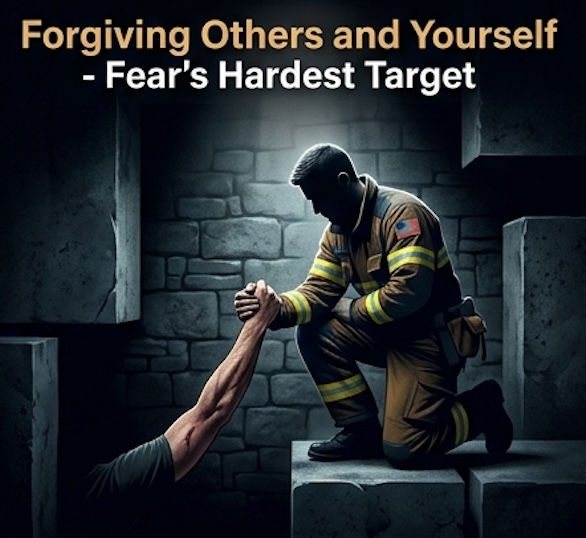
Fear's Hardest Target: Self-Forgiveness
Key Points:
Fear Blocks Self-Forgiveness: We often feel shame for things we did or didn't do during or after our trauma. Fear tells us we’re broken, we’re monsters, or we’re weak, and this shame is another form of fear that keeps us from healing.
Moving Beyond "What Was" to "What Is": True peer support helps us move past the self-blame that fear creates. Forgiving yourself isn't saying what happened was "okay"; it's a tactical decision to drop a heavy load that is slowing you down on the mission to recovery.
We all know fear tells us we aren't worthy of getting better. It convinces us that our invisible wounds define us. But forgiving yourself is one of the most proactive, powerful ways to tell fear to back off. You're not making excuses; you're taking your life back."
Peer Support—Your Secret Weapon Against Fear

You Do Not Stand Alone
Key Points:
Connection is the Counter-Measure: Isolation is fear’s best friend. Fear telling you to withdraw from the group is fear protecting itself.
A "Force Multiplier" for Courage: In this room, your courage isn't just your own; it’s ours, too. We have shared the same trenches and faced the same monsters.
A Safe Tactical Environment: Peer support is where we can talk about the fear without being judged, analyze its weaknesses, and build strategies together.
Warriors for Life (WFL) Online "Awaken Your Inner Healer!" edition presented by Victory for Veterans, Inc. (VFV) - Monday (TONIGHT), April 6, 2026 @ 4:30 PM PT, 5:30 PM MT, 6:30 PM CT, & 7:30 PM ET
Join Zoom Meeting: https://us06web.zoom.us/j/86121340012
Thank you,
Kirk Poe, Certified Peer Support Specialist, Reiki Master, Certified Body/Emotion/Belief Code Practitioner, & Volunteer Facilitator, Victory for Veterans, Inc. (VFV)


Comments