


Join Mikel & Friends TONIGHT for "One Habit at a Time, for Your Mind!" with Warriors for Life (WFL)

Drop in TONIGHT with Volunteer and Army Veteran Mikel Burroughs for "Burly's Warriors" edition of Warriors for Life (WFL) Online, presented by Victory for Veterans, Inc. (VFV).
We are asking everyone to share who we are and what support that Victory for Veterans, Inc. (VFV) is providing via WFL. If you know someone who is a veteran, first responder or a family member/caregiver, please ask them to join us for at least one meeting so they can learn more about what we do and how they can share their wisdom with others who may be able to learn from them.

TONIGHT's Topic: "One Habit at a Time, for Your Mind!"

Join Mikel & Friends TONIGHT as we discuss the mental health importance "One Habit at a Time, for Your Mind!" A discussion about bad habits that can affect your mental health and how to improve them.
Bad habits like poor sleep, unhealthy diets, excessive screen time, and negative self-talk increase stress, anxiety, and depression by disrupting brain chemistry and self-perception, but you can improve them by
identifying triggers, replacing behaviors with healthy ones (exercise, better nutrition, mindfulness, consistent routines), and simplifying new actions to build sustainable change.
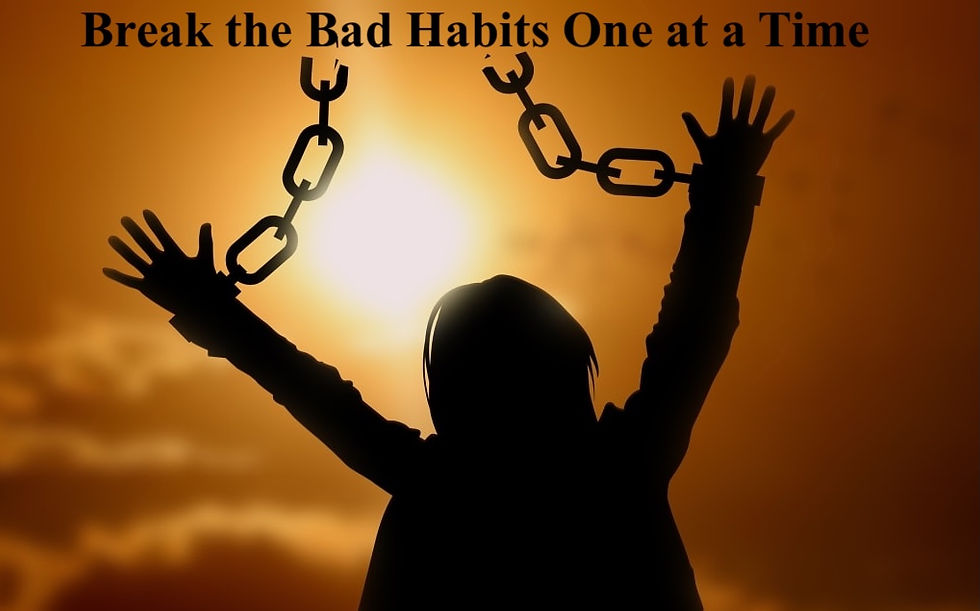
How bad habits harm mental health
Increase stress & anxiety: Overusing social media, negative thinking, and lack of exercise can heighten stress and lead to feelings of inadequacy or low mood.
Affect mood & energy: Poor sleep, junk food, and too much screen time disrupt mood, cause irritability, and decrease focus.
Damage self-esteem: Guilt, perfectionism, and constant self-criticism erode self-worth and foster negative self-perception.
Create negative cycles: Erratic routines, procrastination, and unhealthy coping mechanisms can worsen symptoms of depression and make it harder to cope.

How to improve your habits
Identify Cues & Triggers: Recognize what starts the bad habit (e.g., stress, boredom).
Disrupt the Pattern: Change the environment or action to break the cue-routine link (e.g., put your alarm across the room).
Replace with Healthy Habits: Substitute bad behaviors with positive ones, like swapping a cookie for fruit or a walk for scrolling.
Prioritize Self-Care:
Sleep: Stick to a consistent sleep schedule.
Nutrition: Eat balanced meals; limit caffeine, sugar, and processed foods.
Exercise: Even short walks boost mood and self-esteem.
Mindfulness: Practice self-compassion and reframe negative thoughts.
Keep it Simple: Start with small, manageable changes to build momentum.
Seek Support: Don't hesitate to get help if needed, as change takes time and self-compassion is key.

How good habits support wellness
While bad habits such as smoking or non-stop snacking can have a negative impact on you, positive habits can improve your health and well-being. Here’s why habits can be a good thing:
Efficiency. Habits help make us more efficient. That means it requires less thinking and effort for your brain to do that task. Daily activities are easier because they become automatic. That gives your brain more energy for other tasks.
Consistency. Developing positive habits helps promote regularity and stability and leads to a more predictable and stable routine. Regular activities also help us to develop discipline and self-control.
Goal Achievement. Many habits help us achieve long-term goals. If we break down larger goals into smaller, manageable habits, they become more achievable and sustainable over time.
Health and Wellness. Healthy habits, such as regular exercise, a balanced diet and sufficient sleep, contribute to physical and mental well-being. These habits also lower your risk for various health issues, such as heart disease, stroke, cancer, and diabetes.
Time Management: Developing habits around time management helps individuals use their time more effectively. Planning and prioritizing can lead to increased productivity and a better wrok-life balance.
Stress Reduction: Knowing what to expect and having structured routines can reduce uncertainty and stress. Habits can create a sense of control and stability in one's life.
Skill Development: Consistent practice is a form of habit that is crucial for skill development. Whether it's learning a musical instrument, a new language, or a professional skill, habits play a vital role in improvement.
How to start a new habit
Now that you know why they’re good for you, let’s focus on how you can develop your own good habits. Whether it’s getting started with exercise or reducing your screen time, these tips can help you create a new routine of your own.
Make a decision. Think about what you want to achieve and decide what habit can help you get there. For example, if you want to improve your health, you might choose to make exercise a new habit.
Be specific and realistic. For your habit to “stick” it’s important to be specific. Rather than say “I’m going to exercise more,” determine how often and how much you will exercise. You may start by setting a goal of exercising five times each week for 30 minutes.
Start small. It’s important to start small and gradually increase your efforts. If you have just begun to exercise, don’t expect to run a marathon in a month. To stay motivated, be sure to make it something you can achieve.
Make it part of your schedule. To commit to it, schedule time for your new habit. If you decide to exercise four times mark that time on your calendar. Having it as part of your schedule makes it part of your daily to-do list.
Stick to it. Set a goal for yourself and stick to your plan. Don’t let distractions or emotions keep you from sticking to your new routine. The more you repeat a behavior, the easier it will get. Don’t give up!
Let others know your intentions. When you tell others about your decision, it creates a network of support. When people encourage and support you, it can make all the difference when it comes to a new goal or routine.
How long does it take to form a habit
You may have heard it only takes as little as three days to form a new habit, but that may not be quite enough time. The fact is every habit and each person is different. The time it takes to develop that habit will vary.
A well-known study reports that it takes between 18 and 254 days to build a new habit. It also concluded that it takes 66 days on average for a habit to become automatic.
The take-away? It takes time and effort for a habit to become natural to you. To make it a little easier, the American Heart Association offers the Healthy for Good program, with many tips and tricks to ensure your success in developing your healthy habits.
How to break a bad habit
It can be hard to stop doing something that has become part of your nature. But once you recognize a bad habit, there are ways you can overcome it.
Acknowledge the bad habit. The first step to change is recognizing the issue. If you know your habit is affecting you in a negative way, acknowledge it and decide to make a change for the better.
Identify your triggers. Typically, bad habits are triggered by something. For instance, if you smoke, your normal routine may be to light up after a meal. Knowing that food is your trigger can help you change your behavior.
Create a new routine to replace the old. It’s helpful to change a bad habit by replacing it with a positive one. If you have a habit of stepping outside for a cigarette after a meal, switch it up. Instead of smoking, take a walk, phone a friend, or clean the kitchen. Swapping one routine for another is helpful.
Be kind to yourself. It’s hard to break a habit, and it is easy to fall back into old patterns. When that happens, remind yourself that you are trying to change and focus on getting back to your new routine. Mindfulness is a great way to keep yourself focused and motivated.

Our Vision at Victory for Veterans, Inc. (VFV) is simple: "Where Hope, Support, and Healing come together!"
We encourage you to join us, Everyone is Welcome, Everyone Matters, You Matter to Us, so Talk to Us! — invite a friend!

Warriors for Life (WFL) Peer Support Network Online "Burly's Warriors" edition, presented by Victory for Veterans, Inc. (VFV) — (TONIGHT), January 10, 2026 @ 4:30 PM PT, 5:30 PM MT, 6:30 PM CT, & 7:30 PM ET
Join Zoom Meeting: https://us06web.zoom.us/j/87197441247
Remember: Warriors for Life (WFL) Online, presented by Victory for Veterans, Inc. (VFV) meets on Saturdays, Sundays, Mondays, Tuesdays, Wednesdays, Thursdays and Fridays — (7-days) a week. Every week stay connected on Friday Mornings with "Coffee with Kim" and Monday Mornings for "Cup O' Joe" with Derrick at 8:00 AM CT.
“Everyone Matters, Talk to Us!"— Army Veteran Mikel Burroughs
Thank you,
Army Veteran Mikel Burroughs
Founder & Volunteer Facilitator, Warriors for Life (WFL), & CEO, Victory for Veterans, Inc. (VFV)



Comments