


Join Steven & Friends TONIGHT for "Determination with a Disability!" with Warriors for Life (WFL)

Join our Volunteer, Air Force Veteran, Peer Support Specialist, and Writer/Author Steven Bates TONIGHT for "Mid-Week Musings!" edition of Warriors for Life (WFL) Online, sponsored and presented by Victory for Veterans, Inc. (VFV).
We are asking everyone to share who we are and what support that Victory for Veterans, Inc. (VFV) is providing via WFL. If you know someone who is a veteran, first responder or a family member/caregiver, please ask them to join us for at least one meeting so they can learn more about what we do and how they can share their wisdom with others who may be able to learn from them.

TONIGHT's Topic: "Determination with a Disability!"

From Bad Ankles to Bad Ass Admiral. The never-give-up attitude of Admiral Richard Byrd!

"Admiral Richard Byrd, a name we all grew up learning about in school. The first person to reach the North and South poles by air and the only person in US History to legally wear not one, but TWO, medals with his own image on them! But the rest of the story is even more incredible, for few know that Richard Byrd was actually medically RETIRED after an ankle injury that occurred while serving on the presidential yacht, the Mayflower. Reduced to three-quarters pay and retired, the Admiral never gave up in serving his country. Approximately one year after being medically retired, Richard Byrd was recalled back to active duty in 1917 due to the war.

Not satisfied with the desk job he was given. Richard eventually became aviator certified. Life continued with a series of adventures for Richard, who, in his later years, not only won the Medal of Honor but also had three ticker-tape parades in his honor in New York City, something no one else has ever accomplished.

What drove such a man who was dismissed from serving with a bad ankle? What compels one a person like the Admiral to strive and achieve when marked with a disability? Determination!"
So, how does one stay determined when disabled?
Staying determined while disabled involves grounding oneself in a clear, personal purpose, such as financial security or focusing on health, and maintaining a structured, proactive approach to managing limitations. Key strategies include setting, documenting, and visualizing personal goals, communicating specific, documented limitations to medical professionals, and utilizing self-determination to take charge of one's life.
Here are practical strategies for maintaining determination while disabled, based on the provided search results:
Define Your "Why" and Visualize Goals: Remind yourself regularly of your reasons for pursuing independence, such as securing financial stability for medical needs or focusing on healing without work stress.
Document and Communicate Limitations: Focus on specific, daily functional limitations (e.g., inability to sit/stand for more than 15-20 minutes, memory issues, side effects from medication) rather than just the diagnosis itself. Keep a journal to track these and share them with your doctors.
Take Charge with Self-Determination: Embrace the concept that you are in control of your own life, not just the systems or professionals supporting you. Create a customized life plan that sets a clear, personal vision for your future.
Create Routines for Support: Build daily routines that foster independence and community participation.
Stay Persistent with Medical Care: Ensure your condition is under consistent, documented care, which is crucial for both personal health and any necessary disability documentation.
The ultimate goal of stability can help when facing challenges

Determination, often framed as self-determination, is critical in managing disability and mental health, directly influencing autonomy, quality of life, and recovery outcomes. It empowers individuals to make choices about their care and lives, fostering independence and boosting overall life satisfaction.
Key aspects of the importance of determination include:
Empowerment and Autonomy: Self-determination allows individuals to direct their own services and lives, moving away from overprotection and towards making their own choices.
Improved Quality of Life: Research shows that greater self-determination is strongly linked to higher quality of life, including better community integration, improved personal relationships, and safety.
Mental Health Recovery: It is a core component of mental health recovery, fostering a sense of competence and control.
Dignity of Risk: Allowing individuals to make their own choices, even with the possibility of negative consequences, is essential for learning and independence.
Supported Decision-Making: For those with more limited capacity, determination is supported through shared decision-making, ensuring their preferences are still prioritized.
In essence, determination transforms individuals from passive recipients of care into active agents in their own lives
Determination—specifically framed as self-determination and psychological resilience—is a fundamental driver of recovery and quality of life for individuals with disabilities and mental health conditions. It functions as a "causal agent" that empowers individuals to move from being passive recipients of care to active leaders of their own lives.
Core Importance in Disability and Mental Health
Predictor of Positive Outcomes: Strong self-determination skills are associated with better success in transitioning to adulthood, including higher rates of employment and independent living.
Buffer Against Mental Health Symptoms: High psychological resilience acts as a "buffer," significantly moderating the relationship between physical disability and symptoms of depression and anxiety.
Enhancer of Quality of Life (QoL): Research consistently shows a moderate-to-strong positive correlation between resilience/self-determination and overall life satisfaction.
Prevention of "Learned Helplessness": Early development of determination skills helps prevent overdependence and low self-efficacy, which can otherwise lead to a sense of being a "victim" to one's environment.
Key Functions of Determination
Goal Setting and Achievement: Self-determined individuals define their own recovery goals and work persistently to reach them.
Choice and Agency: It provides the "freedom to decide" how one wants to live, shifting power from agency-directed models to consumer-directed care.
Self-Advocacy: Determination fuels the ability to speak up for one's rights and navigate complex service systems.
Resilience and "Bouncing Back": It provides the "mental toughness" or inner strength needed to rebound from setbacks or traumatic events.
Critical Pillars of Resilience
Practical determination often involves a combination of internal and external factors:
Internal: Positive mental attitude, adaptability, tenacity, and active problem-solving.
External: Strong social support from family, peers, and healthcare providers.
Foundational: Physical well-being, including sleep, diet, and exercise.
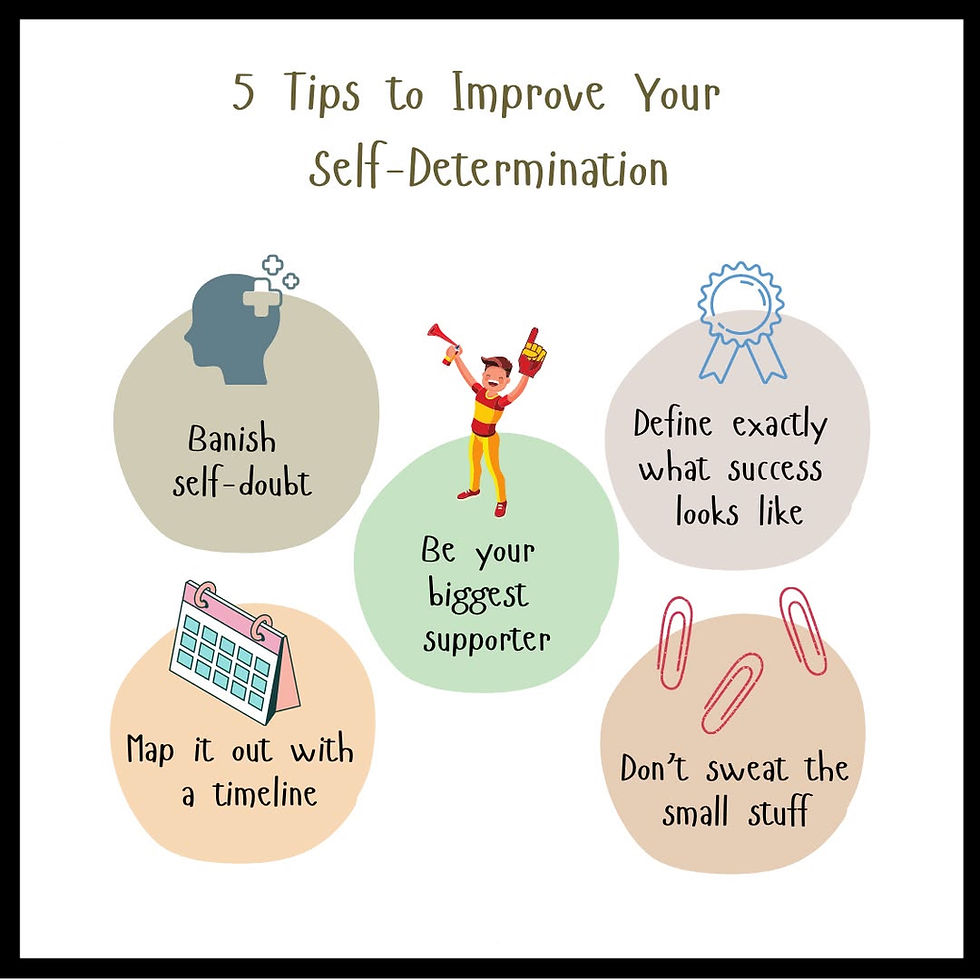
5 Tips to Improve Your Self-Determination
Join Air Force veteran, author, and Peer Support Specialist Steven Bates with the Warriors for Life Mid-Week Musings Peer Support Group as we discuss having determination even when disabled!
Warriors for Life (WFL) Online "Mid-Week Musings!" edition presented by Victory for Veterans, Inc. (VFV) — Wednesday (TONIGHT), March 11, 2026, @ 4:30 PM PT, 5:30 PM MT, 6:30 PM CT, & 7:30 PM ET
Join Zoom Meeting: https://us06web.zoom.us/j/87440882846
Thank you,
Steven Bates
Air Force Veteran, Writer/Author, Peer Support Specialist, &
Volunteer Facilitator, Victory for Veterans, Inc.


Comments